

It’s spring on the Ohio River, and people are getting back on the water. Kayakers, anglers, swimmers, rowers — the river comes alive this time of year. The Ohio is one of the region’s most remarkable natural resources, and there’s no shortage of ways to enjoy it.
But before you launch, wade in, or let the kids splash around, make sure you know the conditions.
Contact Recreation Season is Officially Underway
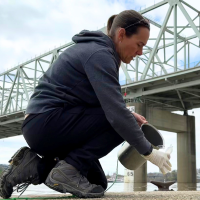
Senior Lead Environmental Scientist Stacey Cochran manages this effort each year from April through October.
Starting in April and running through October, the Ohio River Valley Water Sanitation Commission (ORSANCO) ramps up its Contact Recreation Bacteria Monitoring Program, a weekly effort to track bacteria levels at six urban locations along the Ohio River. Results are published as part of ORSANCO’s weekly water quality report.
Bacteria are present in the Ohio River year-round, but the warm months bring more people to the water and, often, more risk, especially after rain events. When it rains — particularly during heavy or sustained storms — water rushes overland, picking up bacteria from animal waste, soil, and other sources before draining into the river. Combined sewer systems in many Ohio River cities can also overflow during heavy rain, sending a mix of stormwater and untreated sewage directly into the river.
The result: bacteria levels can spike quickly, sometimes within hours of a rainfall event.
What Are We Testing For?
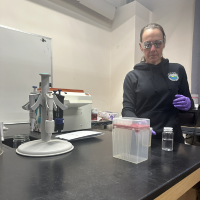 ORSANCO collects and analyzes water samples for E. coli (Escherichia coli) — an indicator of fecal contamination and the bacteria most closely associated with gastrointestinal illness in humans. These results help identify when conditions may be unsafe for swimming, wading, paddling, or any activity that puts you in close contact with the water.
A note on timing: monitoring results reflect recent conditions based on weekly sampling. This is not real-time data; conditions can change between sample collection and publication, particularly after rainfall. When in doubt, err on the side of caution.
E. coli ≤ 240 CFU/100 mL with no recent rainfall → more favorable conditions
Recent rainfall or elevated counts → less favorable conditions
What Happens If You’re Exposed?
Swallowing river water with elevated bacteria levels can cause gastrointestinal illness — nausea, stomach cramps, vomiting, and diarrhea. Children, older adults, and people with compromised immune systems face higher risk. Activities like boating or fishing carry lower risk since water contact is incidental, but that risk increases significantly for swimming and other full-contact recreation.
How ORSANCO Monitors — And Who We Work With
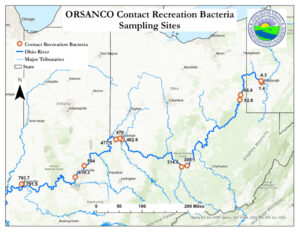 ORSANCO doesn’t work alone. The bacteria monitoring program is a collaborative effort, coordinated with state and local partners across the Ohio River basin. Samples are collected at six urban monitoring locations (Pittsburgh, Wheeling, Huntington, Cincinnati, Louisville, and Evansville) across 16 sites and analyzed by certified laboratories, with results published regularly throughout the season.
Monitoring locations are chosen strategically — near areas of higher recreational use, population centers, and places where urban runoff and sewer infrastructure are more likely to affect water quality.
Learn more about ORSANCO’s Contact Recreation Bacteria program.
Why This Matters
This dataset continues to serve multiple purposes, including:
– Public information and risk awareness
– Clean Water Act 305(b) assessments
– Long-term bacteria trend analysis
Additionally, our data collection often supports major community events like Ironman, Paddlefest, and the Great Ohio River Swim, providing additional context for high-contact recreational use of the river.
The Ohio River is a drinking water source for more than five million people, an economic engine, and a defining feature of the region’s identity. Monitoring its health — and sharing what we find — is central to ORSANCO’s mission. When you check the data before your next river outing, you’re making a smarter decision for yourself and your family.
Before You Head Out
- Wait 48–72 hours after heavy rainfall before swimming or wading.
- Check ORSANCO’s monitoring results before your outing — especially in April, May, and early June when spring storms are common.
- Keep children from swallowing river water, even during supervised swimming.
- Shower after full-contact water activities.
- If you notice unusual odors, discoloration, or foam on the water, avoid contact and report it.
Stay current with our weekly water quality reports.